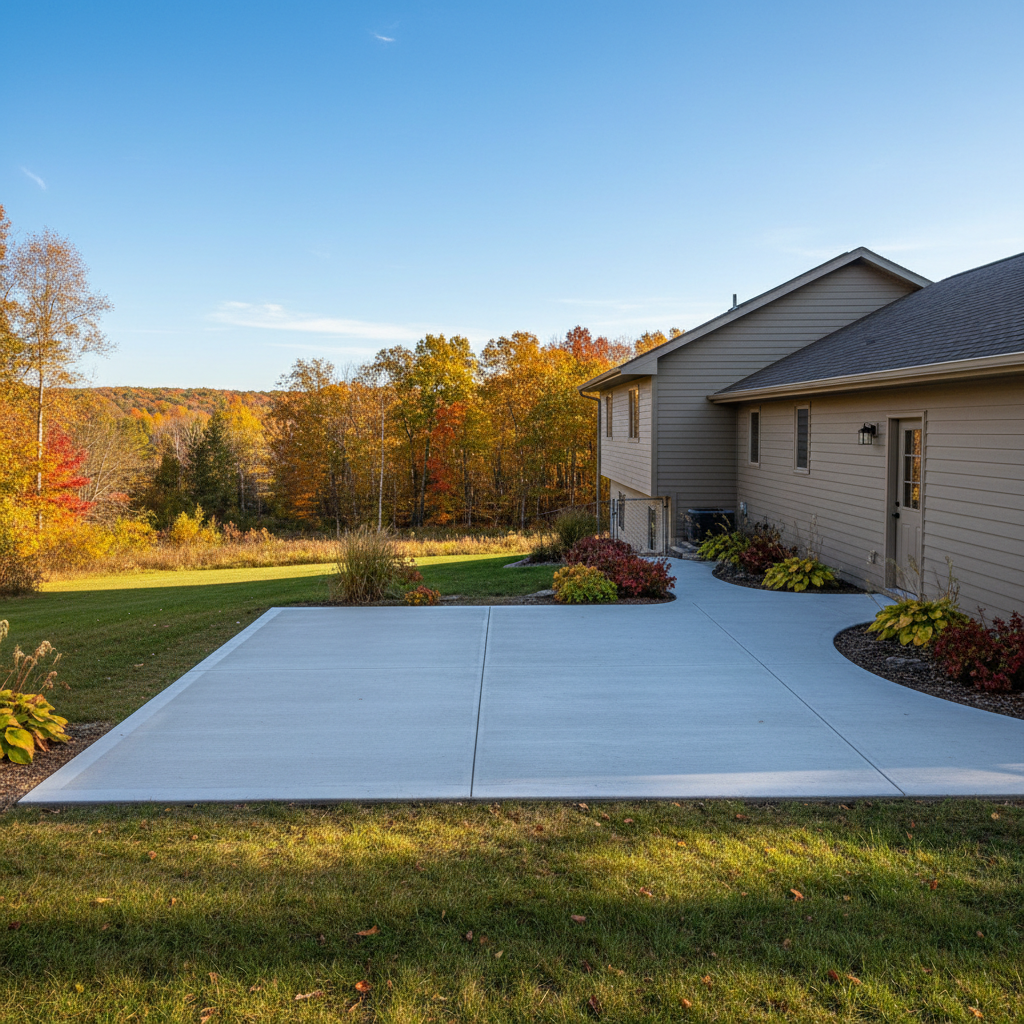
Okay, let's talk about concrete flatwork here in Menomonie. Maybe you're dreaming of a new driveway, a patio for summer barbecues, or just a simple walkway. And you're probably wondering, "When's the best time to actually get this done?" It's a good question, really, and honestly, the answer isn't as simple as just picking a month off the calendar. Our Midwest climate, especially right here in Dunn County, tends to throw us some real curveballs.
When to Get Your Concrete Project on the Books
The sweet spot for pouring concrete around these parts is usually spring and fall. Why? Because consistent temperatures are key. We're talking about daytime highs that generally hover between 50 and 70 degrees Fahrenheit. If it's too hot, the water in the mix evaporates way too fast, and that often leads to cracking and a weaker slab. If it's too cold, the concrete cures too slowly. Or, even worse, it can freeze before it gets strong enough, which is just asking for trouble.
Summer can definitely work, but you've got to be extra careful. Those scorching July and August days, especially when the humidity is high, often mean we're pouring concrete super early in the morning or late in the evening to dodge the peak heat. And we're always thinking about the sun beating down, which can dry out the surface way too quickly. This is where a good contractor, like us at Genesis Concrete Co, really shines. We plan ahead, maybe using special curing compounds or even temporary shelters to manage the heat. It's all part of the job.
Winter? For most flatwork, just forget about it. Sure, you *can* pour concrete in freezing temperatures, but it takes special mixes, heated blankets, and a whole lot of extra precautions that really drive up the cost and make things complicated. For most residential flatwork, it's just not worth the hassle or the risk. We're not building a skyscraper, after all; we're building your patio. So, while you might be picturing a new sidewalk in January, we'll probably tell you to hold off until the frost is completely out of the ground.
Weather Conditions We Really Keep an Eye On
Beyond just the temperature, a few other weather factors truly impact a concrete pour. You might not even think about them, but we certainly do.
- Rain: This one's pretty obvious, right? Pouring concrete when it's raining is a big no-no. It adds water to the mix, which weakens the concrete, and can even wash away the cement paste. If rain is in the forecast, we're rescheduling. End of story.
- Wind: A strong, dry wind can be almost as bad as really high heat. It just sucks the moisture right out of the concrete's surface, which can lead to those annoying plastic shrinkage cracks. We've got ways to deal with it, like setting up windbreaks or fogging the surface, but it's definitely something we watch for.
- Humidity: High humidity can slow down the drying process. That's not always bad, but when combined with other factors, it can make finishing the concrete a real pain. Low humidity, especially with wind, speeds things up way too much.
- Ground Conditions: This isn't strictly "weather," but it's definitely related. If the ground is soaked from heavy rains, or if there's still frost in the subgrade, we simply can't pour. You need a stable, well-drained base for concrete to last. Around here, with our clay soils in some areas, proper drainage and compaction are absolutely critical.
Keeping Your Concrete Investment Safe Year-Round
Once your new concrete is in and cured, your job isn't quite over. You've made an investment, and you want it to last through our brutal Menomonie winters and those hot summers, don't you? Here's how you protect it:
- Curing is Super Important: For the first few days, and ideally a few weeks, keep that concrete moist. We'll put on a curing compound, but sometimes a light misting or covering it with plastic can help, especially when it's dry out. This lets the concrete get strong the way it's supposed to.
- Seal It: After about 28 days, once the concrete is fully cured, put on a good quality concrete sealer. This is your concrete's first line of defense against water, de-icing salts, and stains. You'll want to reapply it every couple of years or so, depending on the product you use and how much traffic it gets.
- Stay Away from De-Icing Salts: This is a big one, folks. Salt, especially rock salt (sodium chloride), is terrible for concrete. It causes freeze-thaw damage by increasing how many freeze-thaw cycles the concrete goes through, which leads to spalling and pitting. Use sand for traction, or if you absolutely have to use a de-icer, look for products labeled "concrete safe" that contain calcium magnesium acetate (CMA).
- Clear Snow Fast: Don't let snow and ice just sit on your concrete for long periods. The less time moisture is hanging around, the less chance there is for freeze-thaw damage.
- Watch Those Heavy Loads: While concrete is strong, repeated heavy loads, especially from vehicles, can cause cracks over time. If you've got a new driveway, try to avoid parking heavy equipment on it right after it's poured. Give it some time.
- Clean It Regularly: Sweep off debris, and hose down your concrete every now and then to get rid of dirt, leaves, and other organic stuff that can stain or hold moisture.
Look, concrete is tough, no doubt about it, but it's not indestructible, especially with the kind of weather we get here. Taking these steps, from smart scheduling to protecting it all year, will help make sure your concrete flatwork looks great and lasts for decades. If you've got questions about your specific project, or you're wondering if now's the right time to pour, just give us a call at Genesis Concrete Co. We're here to help you get it right.