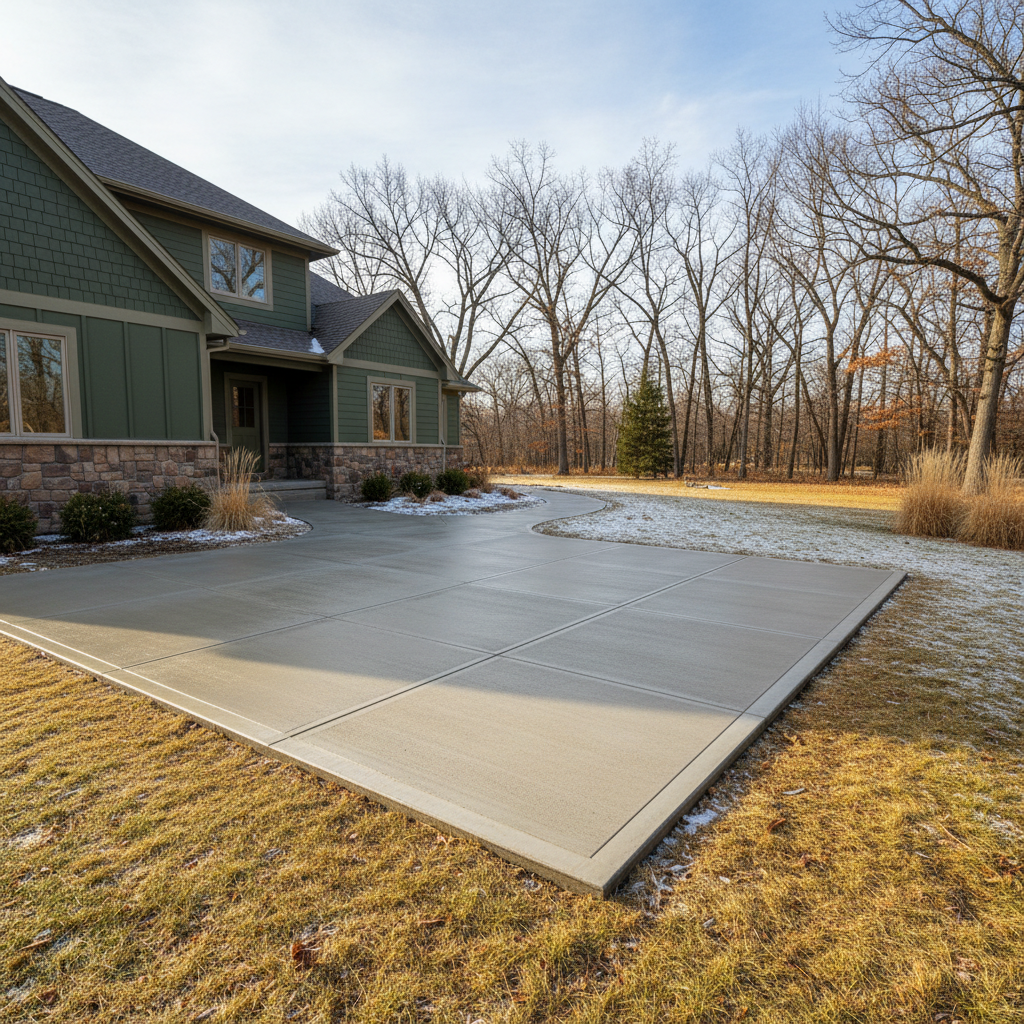
When's the best time to pour concrete around here? It's a question I get all the time, and for good reason. Living in Menomonie, we know our weather isn't exactly mild. That means timing isn't just a suggestion; it's critical for how long your new driveway, patio, or sidewalk will last.
Understanding Menomonie's Climate and Concrete
Our seasons are pretty distinct, right? We've got those beautiful, warm summers, but then we roll into some seriously cold winters with plenty of freeze-thaw cycles. Those cycles are the biggest enemy of concrete flatwork. Water gets into tiny cracks, freezes, expands, and then thaws, leaving bigger cracks. Do that enough times, and you've got spalling, cracking, and a real mess.
So, what does this mean for scheduling your concrete project? You want to give that concrete plenty of time to cure properly before it faces its first deep freeze. Curing isn't just about drying; it's a chemical process where the concrete gains strength. It needs moisture and a stable temperature to do that effectively.
The Ideal Pouring Season
For us in Menomonie, the sweet spot for pouring concrete flatwork is generally late spring through early fall. Think May through September, maybe even early October if we get a nice, long autumn. During these months, temperatures are usually above freezing, and we've got a good stretch of consistent weather.
- Spring (May-June): This is a great time. The ground has thawed completely, and temperatures are steadily rising. You'll want to watch out for those late spring rains, though. Freshly poured concrete can't handle heavy downpours.
- Summer (July-August): Often ideal. Warm temperatures help the concrete cure well, but you need to be careful about it drying too fast. We'll often use curing compounds or keep it wet to slow that process down, especially on those really hot, sunny days.
- Early Fall (September-October): Still a good window. The days are usually warm, and the nights aren't freezing yet. This gives the concrete plenty of time to gain strength before winter sets in. Just make sure the forecast looks clear for at least a week after the pour.
What you really want to avoid is pouring concrete when temperatures are consistently dropping below 40°F, especially at night. If the concrete freezes before it's gained enough strength, you're looking at a weak slab that's going to fail prematurely. It's just not worth the risk.
Weather Conditions That Affect the Pour
It's not just the season; it's the day-to-day weather too. Here's what I'm always watching:
- Temperature: As I said, steady temps above 40°F are ideal. Too hot (like 90°F+ and sunny) can make the concrete set too fast, leading to cracking. Too cold, and it won't cure right.
- Rain: A light drizzle during the pour can be managed, but heavy rain? That's a no-go. It can wash away the cement paste, weaken the surface, and create a real mess. We'll always reschedule if heavy rain is in the forecast.
- Wind: Believe it or not, high winds can be an issue. They can dry out the surface of the concrete too quickly, leading to what we call plastic shrinkage cracking. We might use windbreaks or apply curing compounds sooner if it's a windy day.
- Humidity: Low humidity combined with high temperatures and wind is a recipe for quick drying and potential cracking.
When you work with Genesis Concrete Co., we're always monitoring these conditions. We won't just show up if the weather isn't right; we'll talk to you about rescheduling. It's better to wait a few days than to pour a slab that won't last.
Protecting Your Concrete Investment Year-Round
Once your concrete is in and cured, your job isn't quite done. Here's how to protect it:
- Sealing: This is huge, especially in our climate. A good quality penetrating sealer should be applied within the first year, and then every 2-5 years after that, depending on the product and traffic. It helps repel water and de-icing salts.
- De-icing Salts: Try to avoid using rock salt (sodium chloride) on your concrete, especially in the first year. It's really harsh and can damage the surface. Sand is a good alternative for traction. If you must use a de-icer, look for products labeled as concrete-safe, often calcium chloride or magnesium chloride.
- Snow Removal: Be careful with snow blowers and shovels. Don't dig into the concrete surface. If you've got an older, rougher concrete driveway, you know how easy it is to scrape it up.
- Drainage: Make sure water drains away from your concrete flatwork, not towards it. This is especially important for patios and sidewalks next to your home. We've seen plenty of houses in the Stout area where poor drainage has led to concrete issues.
- Heavy Loads: Try not to park overly heavy vehicles or equipment on your residential driveway for extended periods, especially if it wasn't designed for that kind of weight.
Taking these steps can really extend the life of your concrete. It's an investment, and like any investment, it needs a little care. If you're thinking about a new concrete project, or if you've got questions about your existing flatwork, give us a call at Genesis Concrete Co. We're happy to talk through it with you.