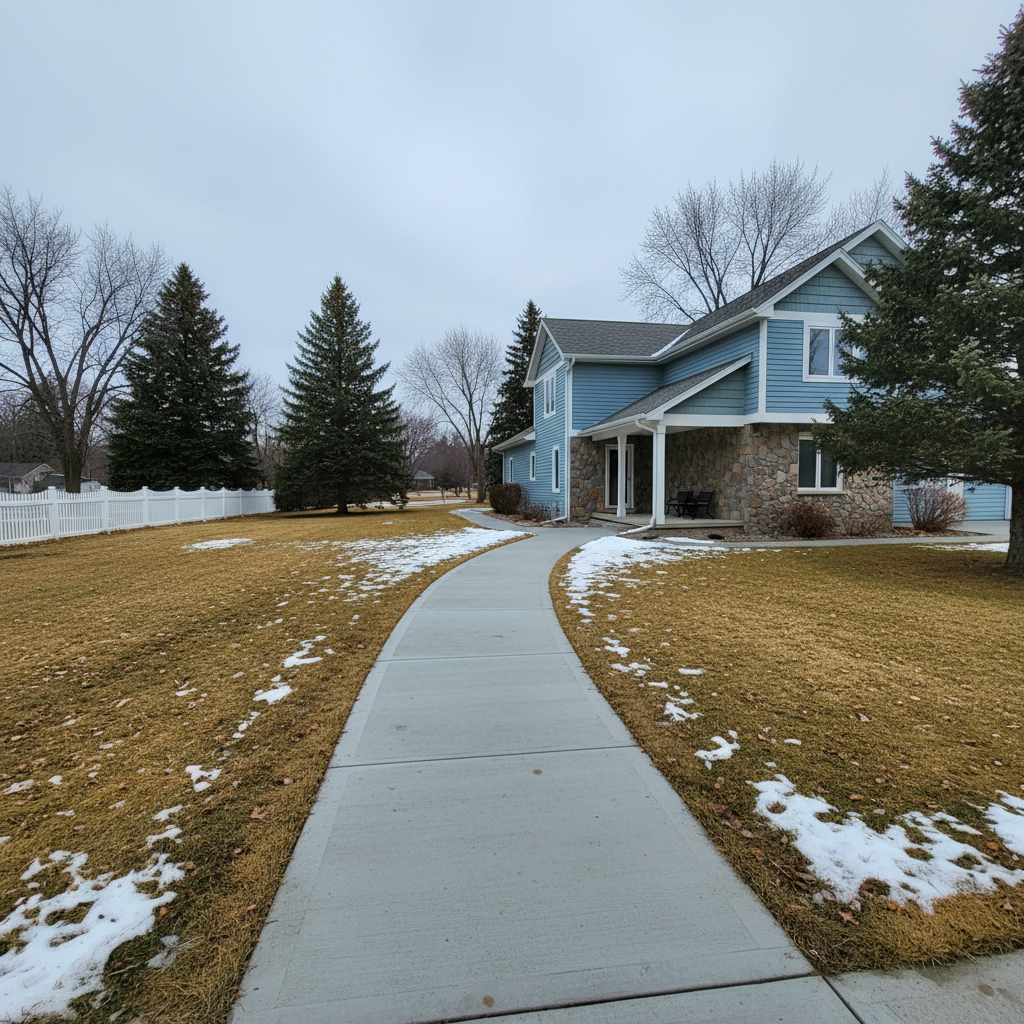
When's the best time to pour a new concrete sidewalk here in Menomonie? Honestly, it's a question I get asked a lot, and for good reason. Our weather in West Central Wisconsin isn't exactly predictable, is it? And concrete, well, it really doesn't like surprises. Getting the timing just right, then taking good care of your concrete all year, that's what makes all the difference in how long it lasts and how nice it looks.
Getting the Timing Right for Your New Concrete Sidewalk
You can't just pour concrete whenever you feel like it, especially not around here. The ground needs to be thawed, for starters. And the air temperature? That needs to stay consistently above freezing, day and night, for a good while after we pour. That usually means late spring, summer, and early fall are your best bets.
- Spring (Late April-May): This can be a pretty good window. The ground has thawed out by then, and we're usually past the worst of those freezing nights. The downside? Spring in Menomonie can be pretty wet. Too much rain, either before or during a pour, can really mess with the subgrade or even the concrete mix itself. We're always glued to the forecast during this time.
- Summer (June-August): Generally, summer's ideal. Warmer temperatures help the concrete cure properly, which is what you want. But, you've got to watch out for extreme heat. If it's too hot, or super windy, the concrete can dry out way too fast, and that often leads to cracking. We use special techniques and additives to slow down the cure when it's hot, or we'll just schedule pours for earlier in the morning.
- Fall (September-October): Another sweet spot. The ground is still warm, and the air temps are usually pretty stable. You just have to make sure we're not getting too close to those first hard frosts. A sudden cold snap on fresh concrete is a recipe for trouble, believe me. We'll often wrap up our pouring season by late October, maybe early November if we get a mild stretch.
What you really want is stable weather. No crazy temperature swings, no torrential downpours, and definitely no freezing temperatures for at least a week after the pour. We're not just looking at the air temperature either; the ground temperature matters a lot too. If the ground is still cold, it can slow down the curing process unevenly, and that's not good for your sidewalk's long-term strength.
Protecting Your Concrete Investment Year-Round
Once your sidewalk's in, the work isn't over. You've really got to protect it, especially with our Menomonie winters. Here's what I tell all my clients:
- Seal It Up: This is probably the most important thing you can do. A good quality concrete sealer, applied after the concrete has fully cured (that's usually 28 days), is your first line of defense. It repels water, salt, and chemicals, stopping them from soaking in and causing damage. I recommend re-sealing every 2-3 years, depending on the product and how much abuse your sidewalk takes.
- Be Smart About De-Icers: This is a big one. A lot of folks just grab whatever de-icer is cheapest at the hardware store, but many of them are terrible for concrete. Products containing ammonium sulfate or ammonium nitrate are concrete killers. They react with the cement paste and cause spalling (flaking) and deterioration. Stick to de-icers that are labeled 'concrete safe' or 'pet friendly,' which usually contain calcium chloride or magnesium chloride. Even better, just use sand for traction.
- Shovel Early and Often: Don't let snow and ice build up. Those freeze-thaw cycles? They're brutal. When water seeps into tiny pores in the concrete, freezes, and expands, it puts incredible pressure on the concrete. Shoveling promptly reduces the amount of moisture that can get in there.
- Watch for Drainage: Make sure water isn't pooling on or near your sidewalk. Proper grading away from the concrete is crucial. If water just sits there, it's asking for trouble, especially if it freezes. We always make sure to grade properly when we install, but sometimes things shift over time, or landscaping changes, you know?
- Avoid Heavy Loads: Fresh concrete is strong, but it's not invincible. Try to keep heavy vehicles or equipment off your sidewalk, especially in the first few months. Even after it's fully cured, repeated heavy loads can cause stress and cracking over time.
Taking these steps won't just make your sidewalk look better; it'll extend its life by years. We've seen plenty of sidewalks in older Menomonie neighborhoods, like those around the university, that have held up great for decades because they were installed right and cared for. Others, not so much. It's a long-term investment, and a little care goes a long way. If you have questions about your existing concrete or are thinking about a new project, don't hesitate to reach out to Genesis Concrete Co. We're always happy to talk concrete.