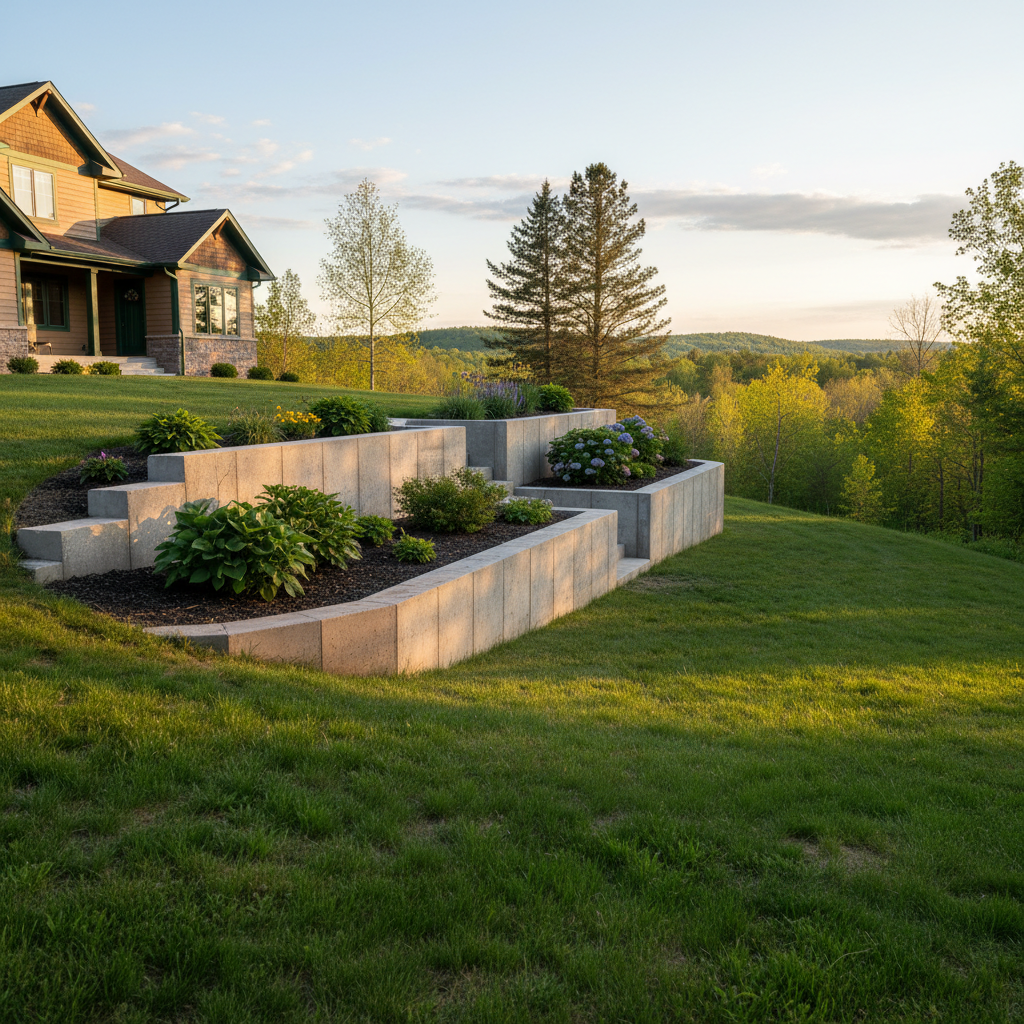
Got a slope in your yard that's just a pain to deal with? Or maybe you're dreaming of a nice, flat spot for a patio or garden? Concrete retaining walls are a fantastic answer, and if they're built right, they'll seriously last for decades. But let's be real, here in Menomonie, our weather isn't exactly a gentle breeze. You can't just throw one up and expect it to hold without some serious thought and planning.
When's the Best Time to Build Your Retaining Wall?
Timing is everything when you're working with concrete, especially for something as crucial as a retaining wall. This isn't just pouring a simple slab; you're constructing something that needs to withstand a ton of pressure and our infamous freeze-thaw cycles. For us, the sweet spot usually runs from late spring right through early fall. Think May to October, generally.
- Spring (May-June): This is a prime time to get started. The ground's finally thawed, but it's not usually scorching hot yet. We get good working conditions, and the concrete has plenty of time to cure properly before the truly cold weather sets in.
- Summer (July-August): Totally doable, sure, but we have to be extra careful with how it cures. Hot, dry weather can make concrete dry out too fast, which actually weakens it. We'll use special tricks like misting it or applying curing compounds to make sure it gets all the moisture it needs.
- Early Fall (September-October): Another excellent window, in my opinion. Temperatures are usually mild, and we often get consistent moisture, which is just perfect for concrete strength. You really want to avoid getting too close to winter, though. Pouring concrete when temperatures are consistently below 40°F? That's a definite no-go if you want good quality.
Trying to build a retaining wall in November or December? Forget about it. The ground's often frozen solid, and pouring concrete in freezing temperatures is just asking for trouble. It won't cure correctly, and you'll end up with a weak wall that won't last. We simply won't do it. It wouldn't meet our standards at Genesis Concrete Co., and it certainly wouldn't meet yours.
How Daily Weather Affects the Work
It's not just about the season; the daily weather plays a huge role. Here's what we're always keeping an eye on:
- Temperature: Like I said, not too hot, not too cold. The ideal range is 50-70°F, but we can work outside that with some adjustments. Below 40°F or above 90°F just means we need to take extra precautions.
- Moisture: Rain is a big problem during the actual pouring and initial curing. We absolutely can't pour concrete in heavy rain because it dilutes the mix and weakens the final product. After it's poured, a little drizzle during curing can actually be good, but heavy rain can wash away the surface or damage fresh concrete.
- Wind: High winds can dry out the surface of fresh concrete way too quickly, which leads to cracking. We'll often set up windbreaks or use curing blankets to protect it.
- Ground Conditions: This is huge for retaining walls, absolutely critical. If the soil is too wet and unstable, we can't properly dig or compact the base. Menomonie has a lot of clay soil in some areas, which can hold a ton of water and get really soupy after heavy rains. Sometimes we just have to wait for things to dry out or bring in special aggregate to stabilize the base.
Keeping Your Investment Strong Year-Round
Once your retaining wall is up, you want it to last, right? Here's how to keep it looking good and doing its job for years to come:
- Drainage is King: This is probably the most critical thing you can do. A good retaining wall isn't just about the concrete; it's about managing the water behind it. We always install proper drainage systems – usually a perforated pipe (a French drain) behind the wall, surrounded by gravel, and covered with filter fabric. Make sure this drain stays clear. If water builds up behind the wall, that hydrostatic pressure can cause it to crack, bulge, or even fail. Check the outlets of your drains periodically to make sure they're not clogged with leaves or dirt.
- Watch for Cracks: Small hairline cracks are pretty normal in concrete as it cures and settles. But if you start seeing large, spreading cracks, or if sections of the wall begin to bulge or lean, that's a red flag. Don't ignore it. Get a professional to look at it right away.
- Keep Heavy Equipment Away: Don't drive heavy vehicles or equipment too close to the top of your retaining wall. That extra weight can put undue stress on the structure, especially if the ground is soft.
- Clean it Up: Power washing once a year can remove dirt, moss, and mildew, keeping your wall looking fresh. Just be careful not to use too high a pressure setting; that can actually damage the concrete surface.
- Seal if We Say So: Depending on the type of concrete and finish, a penetrating sealer can offer an extra layer of protection against moisture, chemicals, and freeze-thaw damage. We can definitely advise you on whether this is a good idea for your specific wall.
A well-built and maintained concrete retaining wall is a serious asset to your property. It's not just about how it looks; it's about stability and how well it functions. Pay attention to these details, especially with our unique Menomonie climate, and your wall will serve you well for a very, very long time.