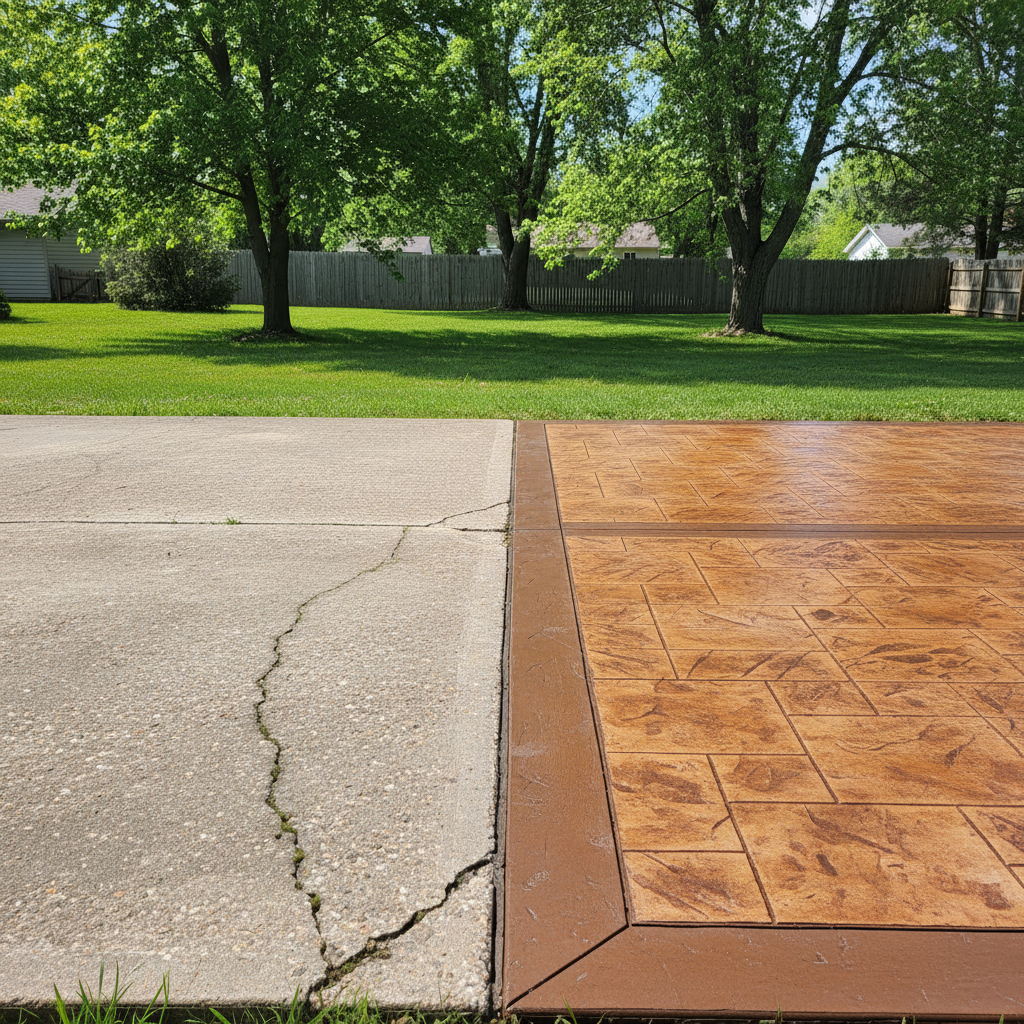
So, you're thinking about sprucing up your concrete, right? Maybe a new patio, or a basement floor that's not just, well, plain gray. That's a smart move; decorative concrete really does add a ton of character and value to a place. But once you start looking into it, you'll quickly see there are a few different ways to get there. Here at Genesis Concrete Co., we often work with two of the most popular options: stamped concrete and stained concrete. They both look fantastic, sure, but they're pretty different in how we do them, what they cost, and how long they last.
Stamped Concrete: That High-End Look, Built Tough
Stamped concrete is all about making concrete look like something else entirely — stone, brick, or even wood. We pour fresh concrete, then add a color hardener and a release agent. After that, we literally press big, flexible mats with patterns right into the wet concrete. Once it's cured, we wash it down and put on a sealer. What do you get? A surface that looks incredibly similar to natural materials but has all the strength and durability concrete is known for.
Appearance
This is where stamped concrete really shines, no doubt about it. You can pick from an amazing variety of patterns and colors. Imagine flagstone patios, brick walkways, or even wood plank-style floors for your basement. The depth and texture are what make it so convincing. It truly catches the eye.
Cost
Generally speaking, stamped concrete is the more expensive choice upfront. There's more labor involved, plus specialized tools, and materials like color hardeners and release agents definitely add up. You're essentially paying for that detailed, custom look. But, if you compare it to laying actual flagstone or brick, it often ends up being more economical in the long run.
Durability & Maintenance
It's concrete, so it's tough. Period. It holds up great to our Menomonie winters, those tricky freeze-thaw cycles, and just general wear and tear. The secret to keeping it looking good and lasting a long time is proper sealing. You'll want to reseal it every 2-3 years, especially for outdoor spots. This protects the color and keeps moisture out. Beyond that, just regular sweeping and an occasional wash with a hose and some mild detergent should do the trick.
Stained Concrete: Subtle Beauty, Deep Color
Stained concrete is a whole different animal. Instead of adding texture, we're adding color that actually soaks into the surface of existing or newly poured concrete. We mainly use two types: acid stains and water-based stains. Acid stains react chemically with the lime in the concrete, creating these translucent, varied, earthy tones. Water-based stains give you a wider color palette and more even coverage, but they don't have that same reactive, mottled look that makes acid stains so unique.
Appearance
Stained concrete offers a more subtle, translucent appearance. Acid stains create this beautiful, marbled effect that's one-of-a-kind for every slab — you can't really predict the exact outcome, which is kind of its charm. Water-based stains give you more control over the color, from bright blues to deep greens, but still let the concrete's natural variations peek through. It's less about trying to mimic other materials and more about making the concrete itself look better. It looks fantastic in basements or garages, giving a rich, deep color without being too much.
Cost
Usually, stained concrete costs less than stamped concrete. The materials are cheaper, and while the application still needs skill, it's not as labor-intensive as pressing intricate patterns.
Durability & Maintenance
Just like stamped concrete, stained concrete is incredibly durable. The color either bonds chemically or soaks in deep, so it won't chip or peel like paint. Again, sealing is super important here. An indoor stained floor might need resealing every 5 years or so, while an outdoor patio will probably need it every 2-3 years, just like stamped concrete. Cleaning it regularly is simple: sweep, then mop with a neutral cleaner. Pretty low-fuss, if you ask me.
Which One Should You Choose for Menomonie?
Alright, so you've got the basic info. If you're really aiming for that high-end, realistic look of stone or brick for your outdoor patio, walkway, or even an indoor feature, and you've got the budget for it, stamped concrete is probably your best bet. It really makes a statement and transforms a space. We've done some amazing stamped patios in the Wilson Place neighborhood that truly stand out.
However, if you're looking for a more affordable way to add color and character, especially for an interior space like a basement floor, a garage, or even a simple patio where you want a rich, natural-looking color without the texture, stained concrete is an excellent choice. It’s durable, looks great, and offers fantastic value.
For outdoor applications here in Menomonie, both will hold up well to our harsh winters as long as they're installed and sealed correctly. That sealing is key, truly; it protects against moisture and salt damage. If you're going for a really intricate pattern that might have more little nooks and crannies to trap snow or ice, you just need to be extra diligent with that sealing schedule.
Ultimately, it comes down to what you like the look of and what you're willing to spend. Both are great ways to upgrade your concrete. Give us a call at Genesis Concrete Co., and we can show you samples and help you figure out what's going to work best for your home.